After several years of focusing on the Product Page, I was asked to start a new team that would explore innovative ways to connect the site and stores, bridging the gap between the two main experiences customers had with the brand. This was pre-Covid, when innovative in-store experiences were a competitive space, and my goal was to find solutions that set us apart from everyone else. I started this work by focusing on store employees, who were the main connection to our customers.
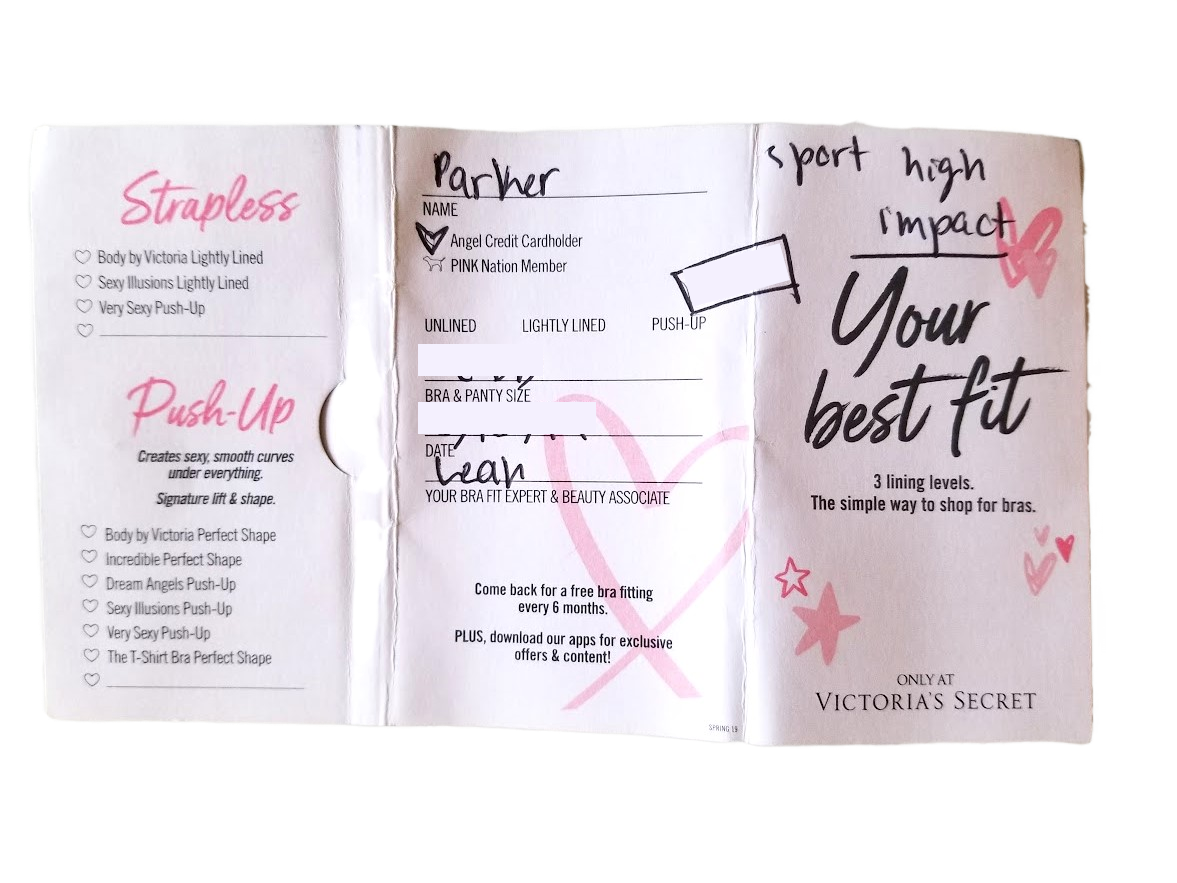
Victoria’s Secret fitting rooms are one of the brand’s most popular experiences. It’s a vital touch point with the brand and highly personal, but since the experience is captured on paper, it’s also tedious for associates and lost when the customers leave the store. It also required a high level of expertise and mental load for employees who would like to spend more focus on the customer interaction.
Another researcher and I spent several months researching in-store experiences across a variety of brands and product types. We customized shoes, tried on clothing wired with measurement bands, and used digital fitting room mirrors. I also conducted a naturalistic observation study to better understand the decision-making considerations and mindsets of participants while in a store environment.
The initial findings led to the beginning of a new way of thinking about what tools the store employees had and we had started to create the wireframes for initial testing.